Description
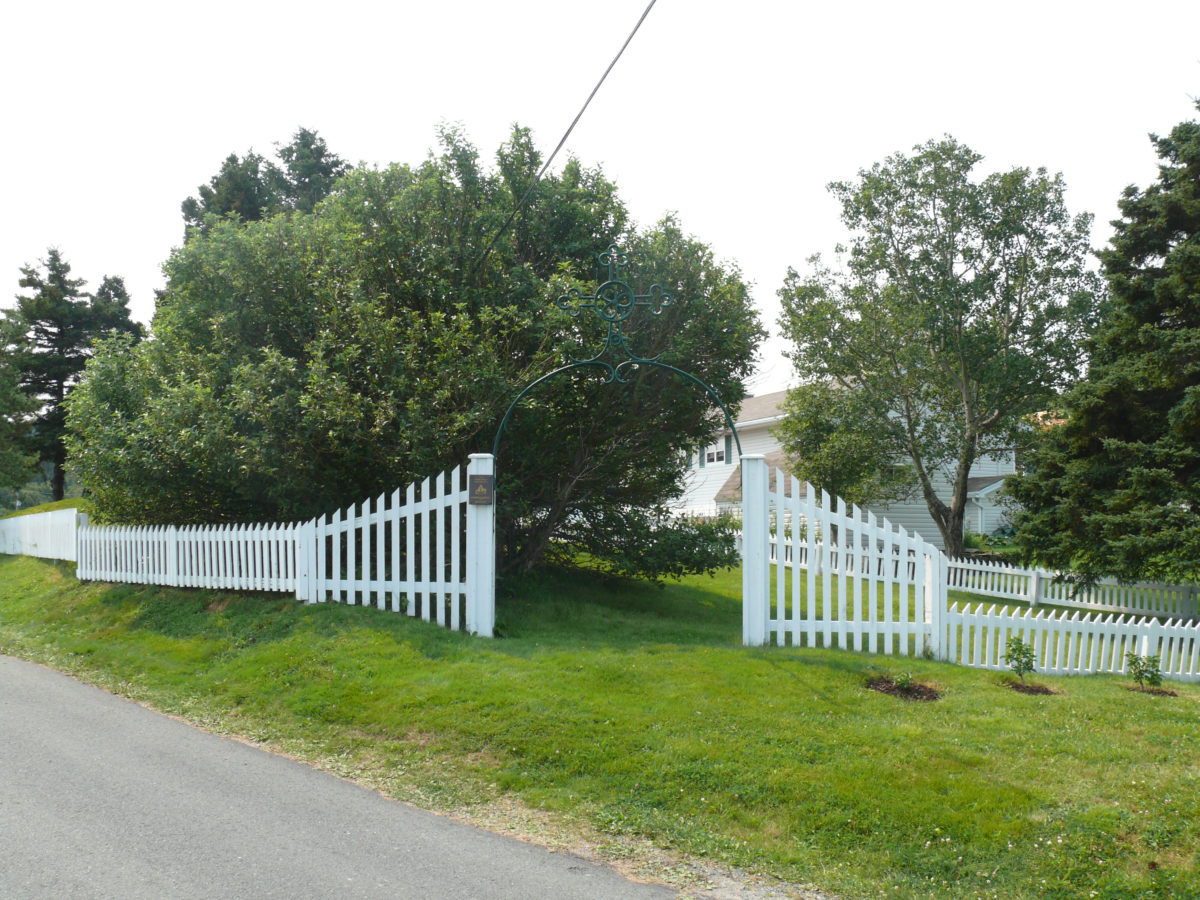
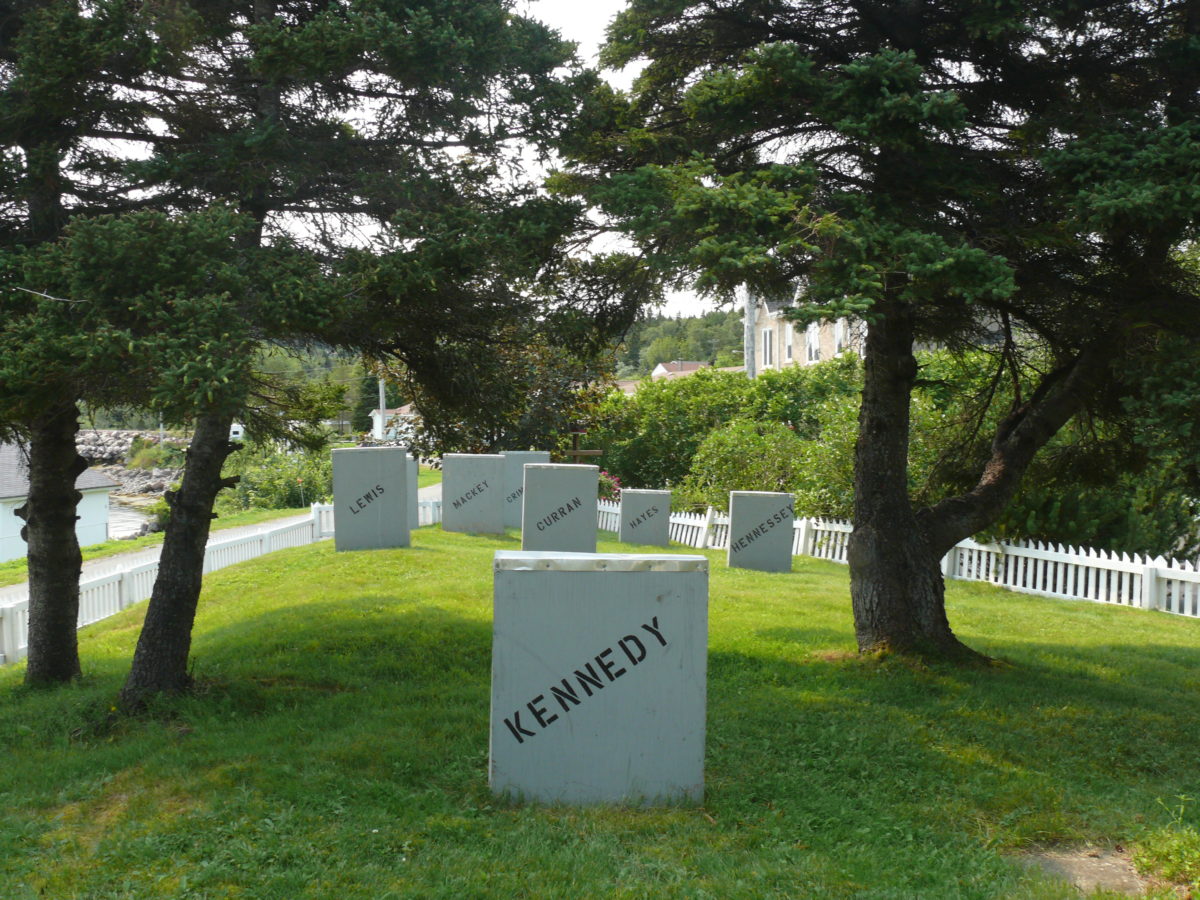
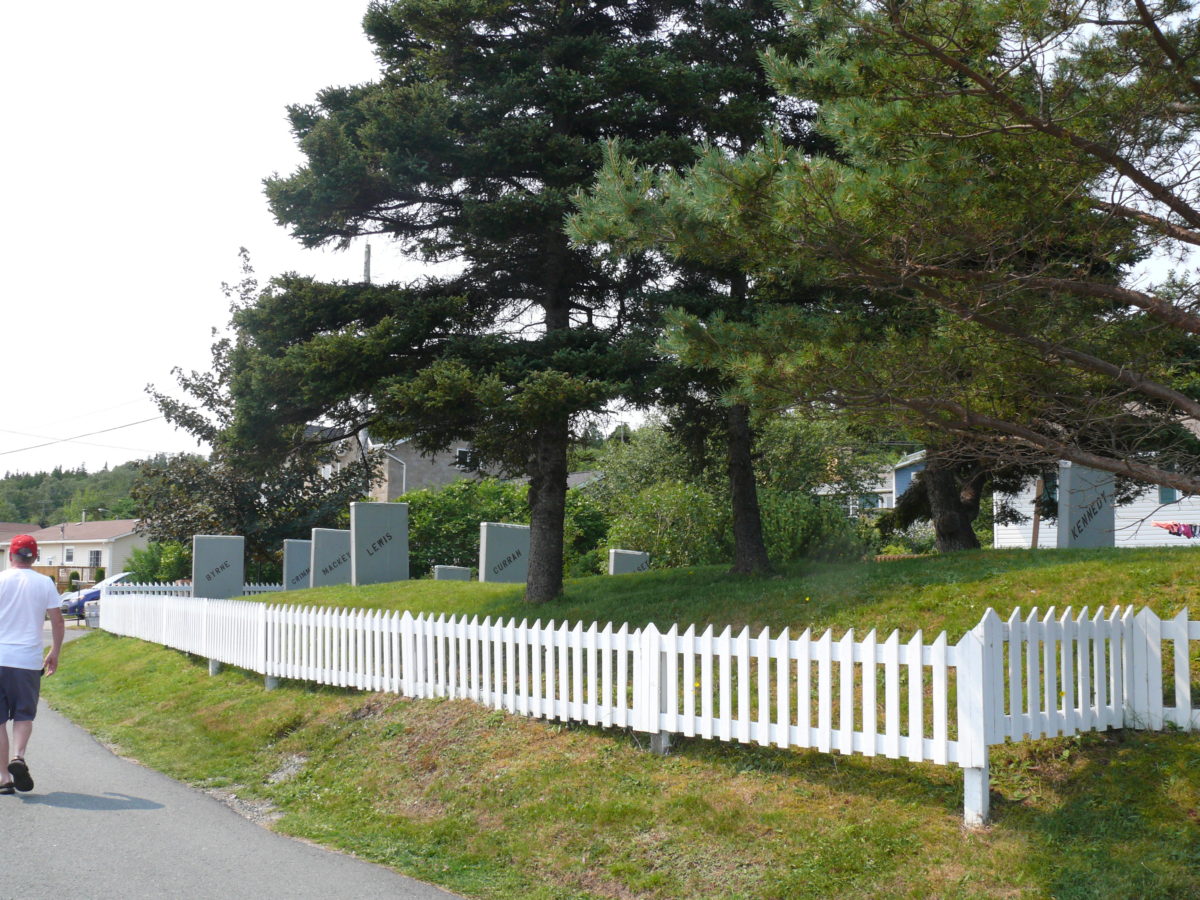
The Chapel Cemetery is located on a small, grassy embankment with several mature trees, eight re-erected headstones, and at least one prostrate headstone. It is located off Back Road on the north side of the harbour in Holyrood, NL. The area has been assigned Borden Number CiAg-03 and site name Holyrood Cemetery Site by the Provincial Archaeology Office. The designated area is bounded by Back Road on the east and south sides, and by fencing on the north and west sides, along the boundary of private property, and the designation includes the mature apple tree and headstones within that area.
Statement of Significance
Formal Recognition Type
Municipal Heritage Building, Structure or Land
Heritage Value
The Chapel Cemetery has been designated a municipal heritage site by the Town of Holyrood due to its historic, spiritual and aesthetic value.
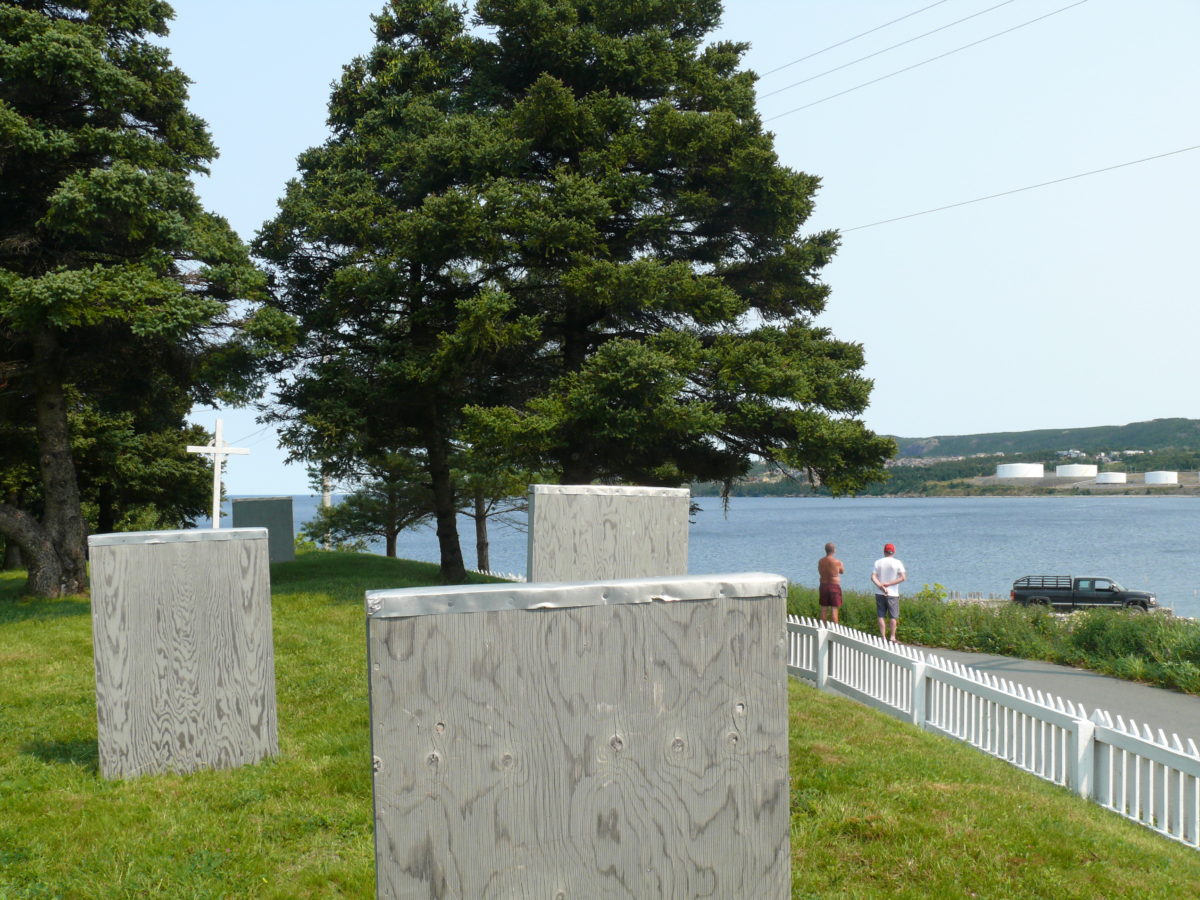
The Chapel Cemetery has historic and spiritual value as the oldest known consecrated cemetery associated with the Roman Catholic faith in Holyrood, a community settled primarily by Irish immigrants in the late 1700s and early 1800s. The cemetery is located on a grassy embankment near the shoreline, with several mature spruce trees and a large non-native apple tree, and is marked by an erect wooden cross. This area is the former grounds of a wooden chapel that was in use from about 1845 to 1879, during which time Holyrood was a mission of Harbour Main Roman Catholic Parish. The Chapel Cemetery appears to have been in use only until about 1860. The rate at which the cemetery reached capacity in a small community has been tentatively attributed to outbreaks of smallpox, typhus fever and/or cholera which occurred in the region during that period.
The headstones at the cemetery have historic value as artifacts on the landscape, and because they contain genealogical type information. While there are undoubtedly many now unmarked graves in the Chapel Cemetery, nine sizable carved headstones remain, eight of which are legible and record dates of deaths between 1841 and 1857. Three of the headstones identify the deceased as Irish immigrants. The carved headstones at the Chapel Cemetery range in height from approximately one to two metres, and are tablet forms in marble or sandstone, in keeping with their age. One of the gravemarkers is of a style fairly uncommon in Newfoundland, being sandstone inlaid with a white marble medallion of a Christian motif known as the Emblems of the Passion. Two of the marble headstones bear the mark of J. Hay, a stonecarver working in St. John’s around the mid-nineteenth century.
The Chapel Cemetery has aesthetic value owing to its location and because its combined elements – terrain, flora, and headstones – evoke the late nineteenth century period when the mission chapel stood at the site and the cemetery was in use.
Source: Town of Holyrood Regular Council Meeting May 13, 2008.
Character Defining Elements
Those landscape elements related to the cemetery’s function and age:
-siting;
-grassy topography;
-cross;
-mature spruce and apple trees, and;
-style and materials of inscribed, carved nineteenth century headstones.
Notes
The headstones are enclosed in wooden boxes. The headstones at the Chapel Cemetery commemorate Ellen Hennesey, James Lewis, John Byrne, Patrick Crimmons, John Kennedy, Sophia Curran, James Curran, Anastasia Mackey and Richard Mackey.
Location and History
Community
Holyrood
Municipality
Town of Holyrood
Civic Address
Back Road
Construction (circa)
1841 - 1857
Location
Similar Heritage Properties

 Google map
 Website