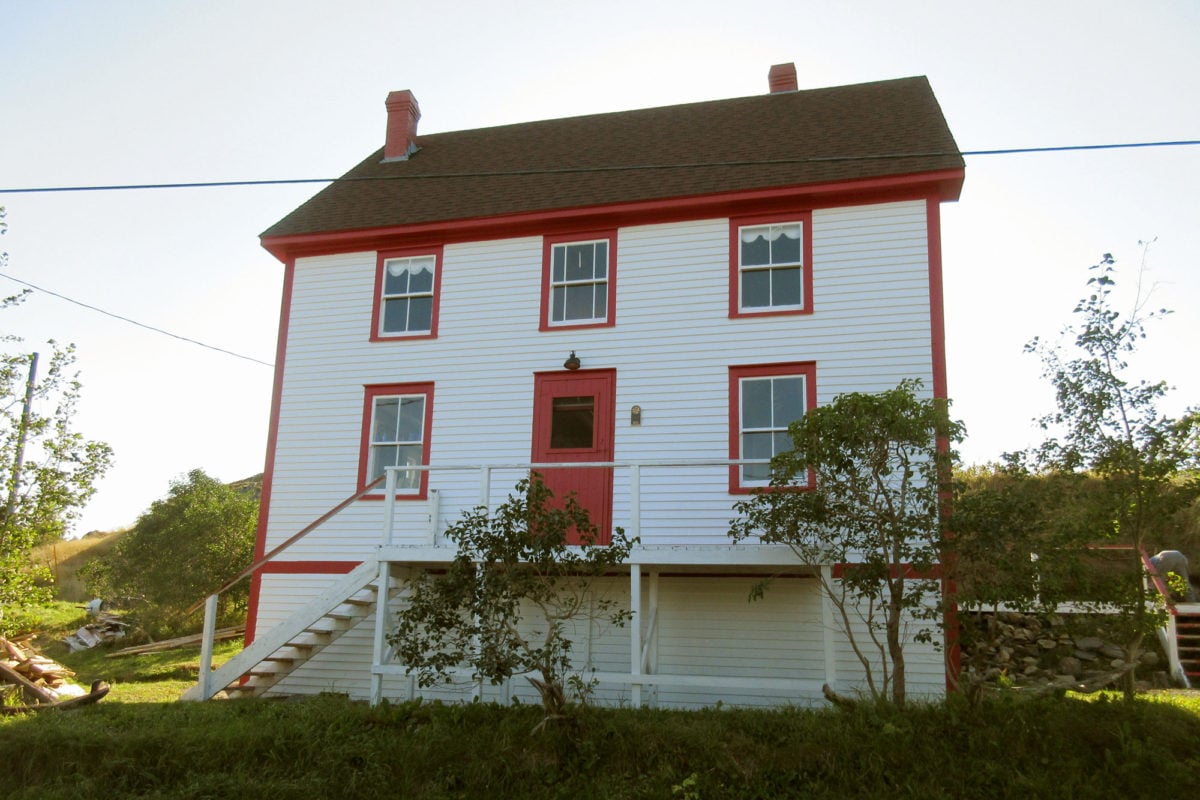
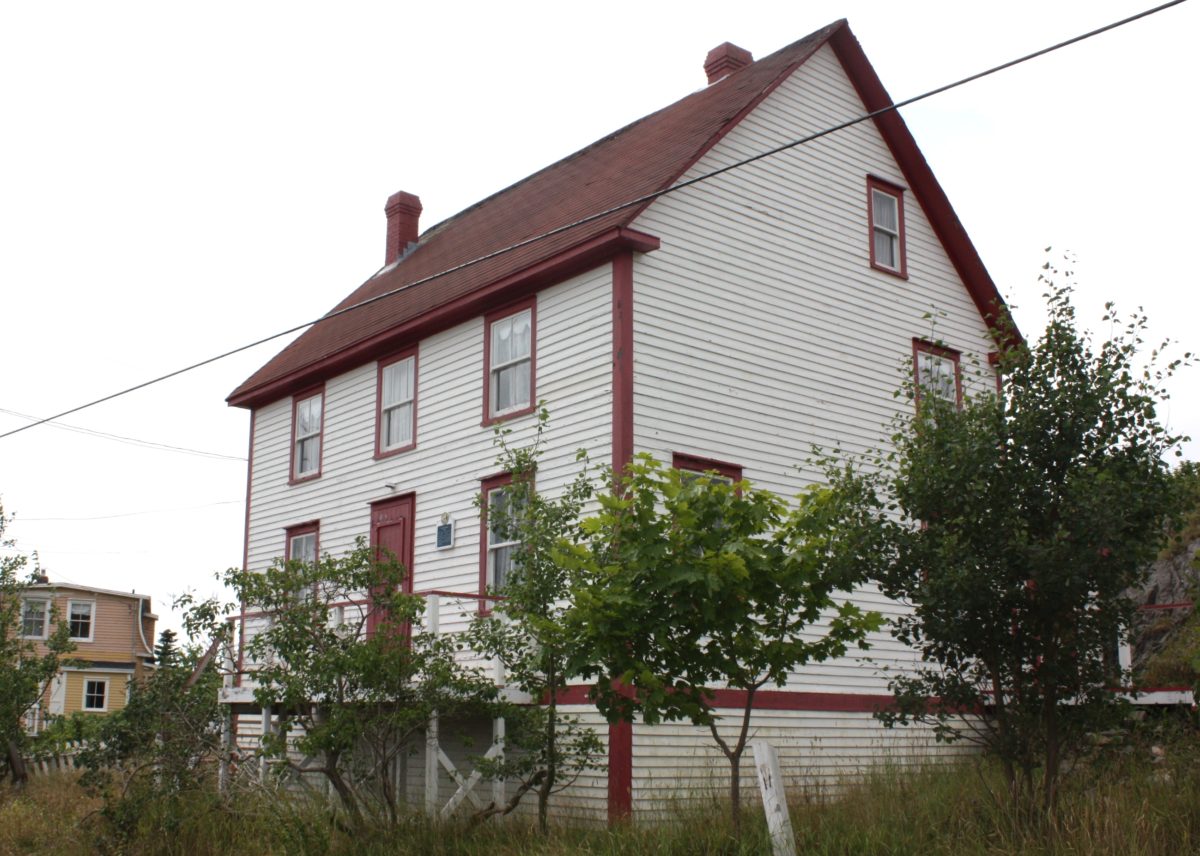
The Evelly House is a two-and-a-half-storey 19th century, steep gable style house located in Trinity East, Trinity Bay. The designation is confined to the footprint of the building.
Formal Recognition Type
Registered Heritage Structure
Heritage Value
The Evelly House has been designated a Registered Heritage Structure by the Heritage Foundation of Newfoundland and Labrador because of its aesthetic and historic value.
The Evelly House has aesthetic value as it is a good example of the mid-nineteenth century domestic architecture in Trinity Bay. The house, significant for its full studded method of construction, is one of the oldest in the community and has not been altered structurally since it was built. Traditional elements of this house include its symmetrical facade and back porch, typical of Newfoundland outport construction during that era. The Evelly House is probably best known for its steeply pitched gable roof since the majority of the homes in Trinity East similar to this one have had the roof lowered.
Evelly House has historic value due to its past use and people associated with the building. Originally constructed for Mike Evelly, a schooner captain, the attic of this house was often used by members of his crew while waiting out strong winds. During the 1940s and 1950s, the house was a boarding home for visitors including musicians, salesmen, teachers, inspectors and even a bishop. Gordon Andrews, who owned the house for a number of years, was a teacher and a man of some importance in the community. Because of his position, it was quite common for residents to seek his economic, social and religious advice.
Source: Heritage Foundation of Newfoundland and Labrador property file “Trinity East – Evelly House 141”
Character Defining Elements
All original features which relate to the age and vernacular style of the building, including:
– steep gable roof including return;
– narrow wooden clapboard;
– symmetry of front façade;
– size, shape and location of windows;
– size, shape and location of doors;
– transom above original door;
– size shape and location of enclosed porch on rear facade;
– lack of exterior decoration typical of 19th century outport houses;
– dimensions and location of house within the community, and;
– green space surrounding house.
 Google map