Description
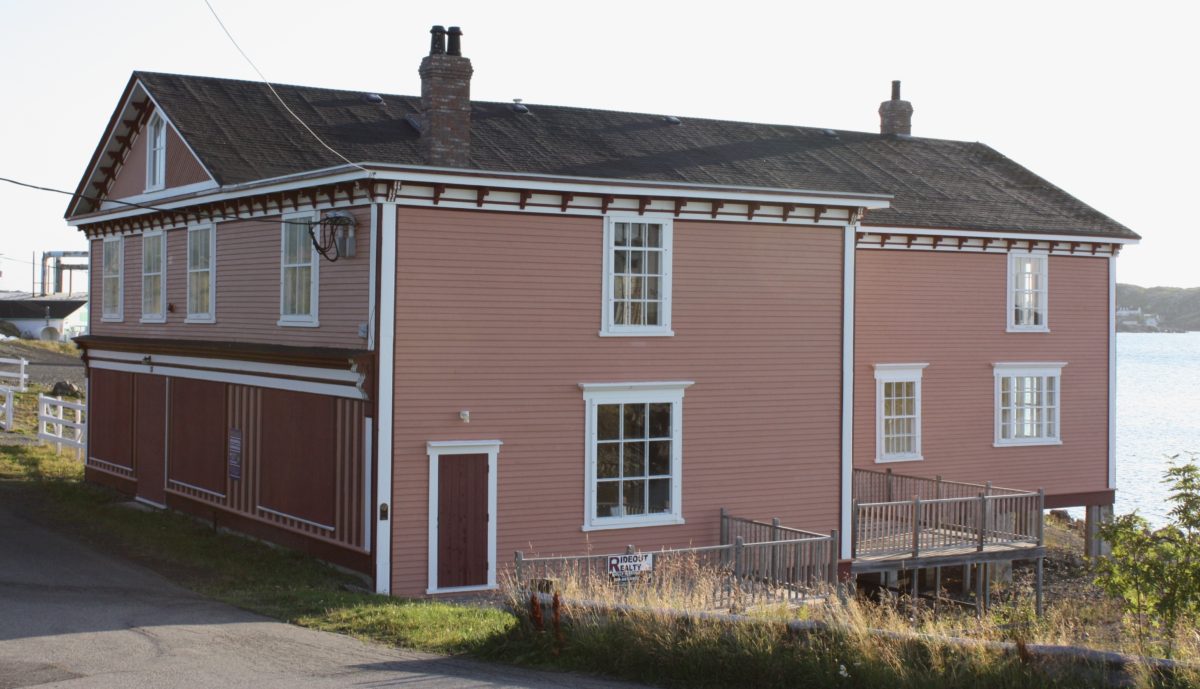
Hodge Brothers Premises is a wooden, two-and-a-half storey, mercantile style building located on the water’s edge at 18 Path End, Twillingate, NL. Construction of the building was completed in 1914. The designation is confined to the footprint of the building.
Statement of Significance
Formal Recognition Type
Registered Heritage Structure
Heritage Value
Hodge Brothers Premises was designated a Registered Heritage Structure by the Heritage Foundation of Newfoundland and Labrador in 2006 due to its aesthetic and historic value.
Hodge Brothers Premises has aesthetic value as a wooden building featuring many elements of a multi function mercantile structure. Its decorative elements are somewhat unique for such a utilitarian building. The façade is comprised of a traditional storefront with large glass windows and a moulded sign band flanked by large brackets. Eaves brackets support the extended eaves of the gable and flat roofs, giving the structure an elegant appearance. The rear of the building extends beyond the high water mark into the harbour. This rear section accommodated the ongoing business conducted from the water by boats and schooners, some of which were owned by the Hodges. The building is the last standing of several owned by the Hodge family and is the only original building of its type remaining on the north side of Twillingate.
Hodge Brothers Premises has historic value for its association with the Hodges of Twillingate, who were involved in the fish and retail trade in Twillingate from the 1870s until the 1960s. In the 1870s, Richard Hodge and his brother Thomas Hodge acquired these premises, which were formerly owned by the Slade merchant firm. They operated in partnership with William Waterman & Company until the 1880s. Around this time, Thomas Hodge moved to St. John’s and Richard Hodge continued to oversee the business in Twillingate. Richard Hodge reputedly became insolvent in 1895 and John Wheadon Hodge took over the business at the Hodge premises. Richard continued his involvement in the firm and upon his death, his sons Arthur and Cyril took over the operation of the business under the direction of John Wheadon Hodge. John retired to Toronto in 1918, at which time Cyril and Arthur independently operated the business under the name Hodge Brothers. The firm offered hardware, dry goods, coal and provisions for retail and exported fish, fish products and berries. Both Cyril and Arthur were active in community affairs in Twillingate. Arthur was a justice of the peace, sat on the first board of directors for Notre Dame Hospital, served on the hospital’s Committee of Stewards and was a member of the Twillingate Masonic Lodge. Cyril was active in church affairs and was a choir master of the North Side Church. The brothers died within a few months of each other in 1963 and their business ceased operations the same year.
Source: Heritage Foundation of Newfoundland and Labrador property file “Twillingate – Hodge Brothers Premises – FPT 1332”
Character Defining Elements
All those elements that reflect the vernacular, merchant fisheries building, including:
-main mid pitch gable roof and flat roof on side wing;
-eaves brackets on extended eaves of gable and flat roofs;
-chimney size, style and location;
-narrow wooden clapboard;
-wide wooden corner boards;
-four bay façade at the front resembling a storefront;
-plate glass windows and moulded sign band with large brackets;
-size, style, trim and placement of multi-paned wooden windows with wide moulding, rain caps and sills;
-size, style, trim and placement of wooden storm windows;
-size, style, trim and placement of exterior wooden doors;
-wooden construction on wooden posts;
-position of rear of building extending beyond the high water mark into the harbour;
-size, style, trim and placement of addition on left facade;
-dimensions, location and orientation of building, and;
-continued association with Hodge Brothers on exterior signage.
Location and History
Community
Twillingate
Municipality
Town of Twillingate
Civic Address
18 Path End
Construction (circa)
1914 - 1914
Style
L - Shape
Location
Similar Heritage Properties

 Google map
 Hodge Premises Inn Website