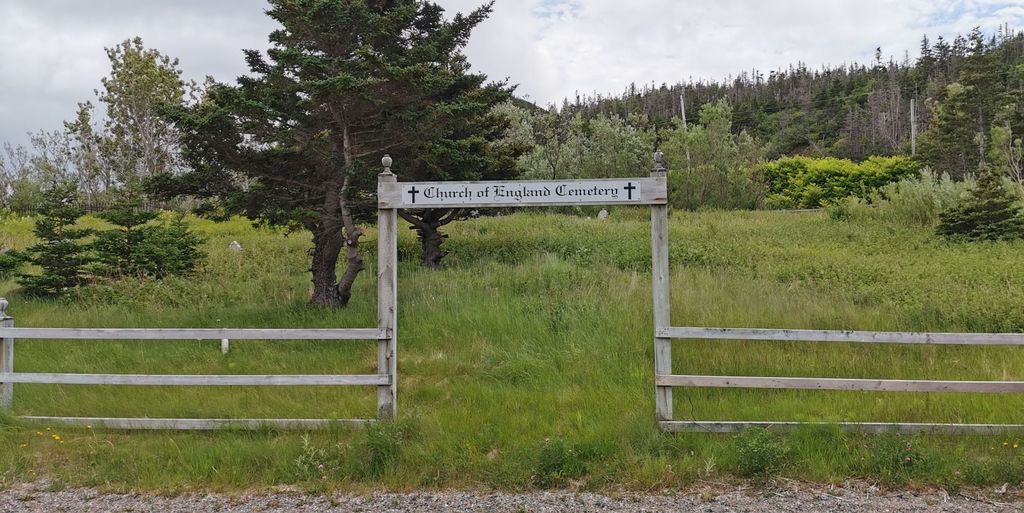
The old Church of England Cemetery in Harbour Breton, NL is located on Rocky Point Road on the south side of the community. It was established in the early 1800s on the eastern section of the Newman and Company plantation. The cemetery is approximately 100 feet by 100 feet and overlooks the entrance to the harbour. The designation includes the footprint of the cemetery.
Formal Recognition Type
Municipal Heritage Building Structure or Land
Heritage Value
The Church of England Cemetery has been designated a municipal heritage site by the Town of Harbour Breton due to its historic value.
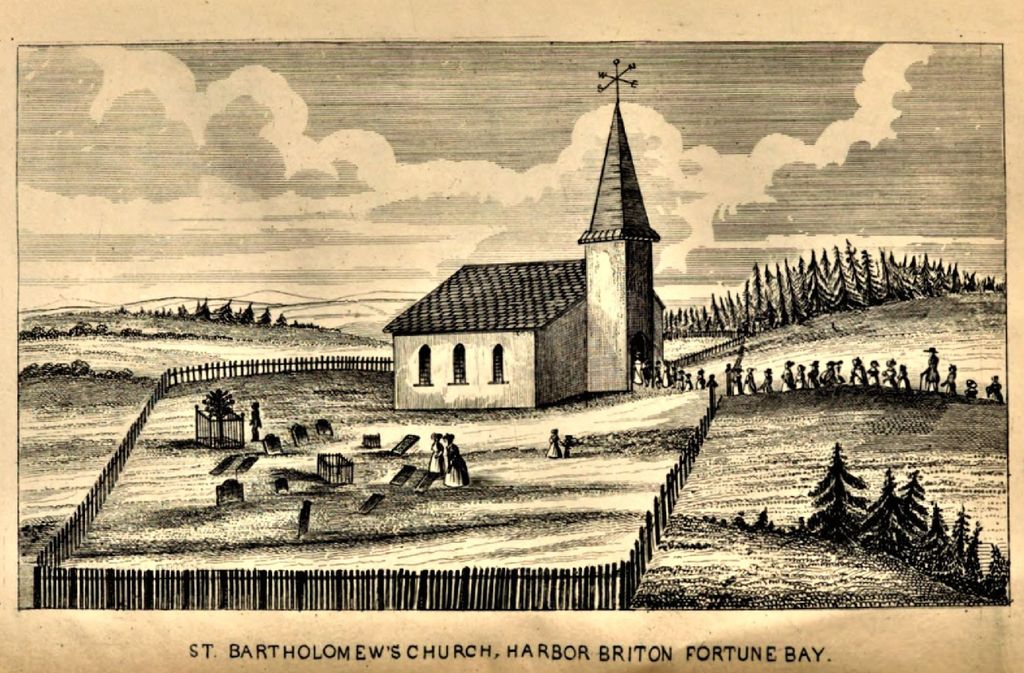
The Church of England Cemetery has historic value due to its association with the Newman and Company firm and other notable people in the community’s past. In 1830, Missionary James Robertson encouraged Newman and Company to establish a church in the community. Construction of St. Bartholomew’s soon followed and a cemetery expanded around the church (although some burials predate the construction of the church). Philip Tocque’s 1845 sketch of the church shows a well-established cemetery. Because of its location and the influence of the Newman and Company firm, the cemetery is often referred to as the Newman and Company cemetery.
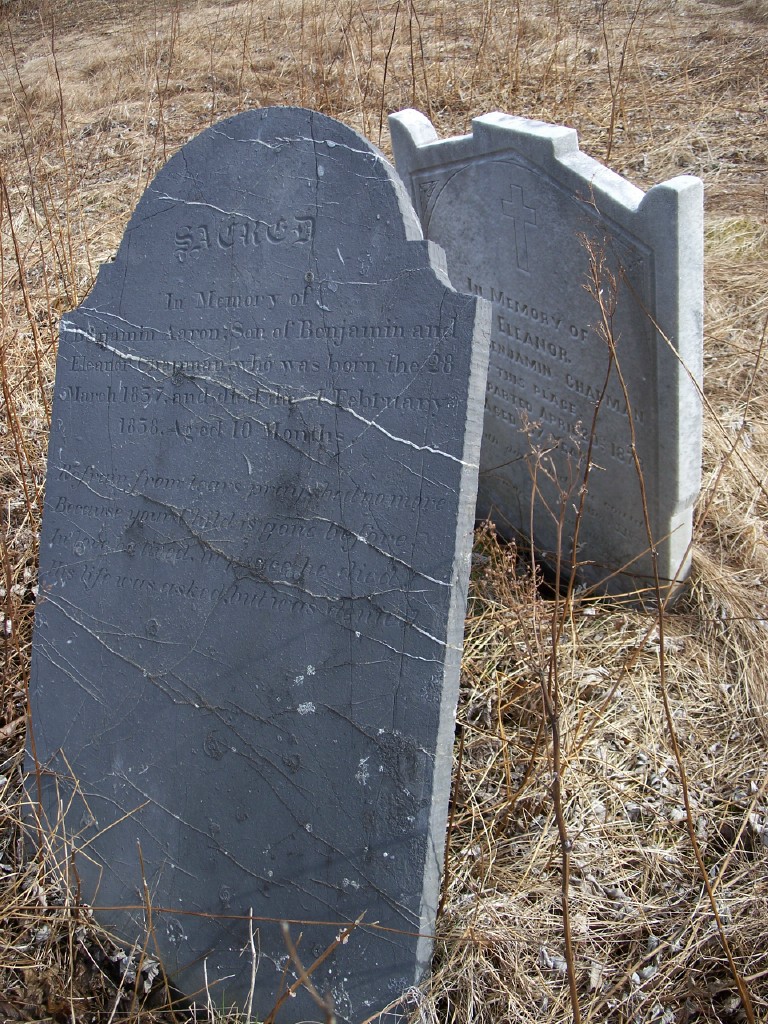
Newman and Company employees and family members – from England and Jersey in particular – who died while serving with the firm in the 1800s are buried in this old cemetery, as are individuals who moved from other communities in Connaigre Bay and Fortune Bay to work for the Newmans. Also buried here are people who had leadership roles within the community. Surnames represented include Birkett, Boyce, Bungay, Chapman, Hardy, Payne, Quintin, Richardson, Simms, Snook, Taylor, Trood, and White. The remaining headstones are made of slate, sandstone, and marble – representative of the time period in which they were erected.
Burials marked by headstones include James Taylor who died on October 18, 1818 and Sarah Chapman who died on July 23, 1831, aged 62 years. Also brothers John (died 1838, age 2) and William (died 1848, age 9), sons of John and Elizabeth Trood of England. John was a clerk with Newman and Company and Elizabeth was the first schoolteacher in Harbour Breton. Their burials are enclosed by a high, iron fence. Thomas Birkett, Esquire, from Holmrook, Cumberland, England died in 1876. He served as Harbour Breton’s justice of the peace, stipendiary magistrate, commissioner of wrecks, customs collector, and postmaster. Perhaps the largest headstone in the cemetery is that of Alfred DeGruchy Richardson of St. Martin’s, Jersey, who “Died at Harbour Breton while in the employ of Messrs. Newman & Co.” He died on Valentine’s Day, 1884, at the age of 17 years. William Kepple White (died May 29, 1886), Priest and Rural Dean of Fortune Bay, is also buried there. Born in Southwark, London, England, Rev. White was rector of St. Bartholomew’s Church for 32 years. Another family plot enclosed with a metal fence is that of James Hardy (died in 1899), his wife Hannah, and their daughter Emily. From Middle Marsh, Dorset, England, Mr. Hardy was Newman and Company’s wine store manager in Harbour Breton. Captain Jacob Simms (died in 1905), commander of Newman and Company’s ship Greyhound, and his wife Anne are buried in a plot enclosed with low, iron fencing.
From existing headstone transcriptions, the cemetery seems to have been in use for close to a century and a half. Although many headstones in the cemetery are no longer standing, are covered with grass and sod, or are badly weathered, they are important pieces of Harbour Breton’s history and serve as historical records on the landscape.
Source: Town of Harbour Breton Regular Council Meeting, Motion #18:155:D, November 6, 2018.
Character Defining Elements
All those elements that define the cemetery, including:
-association with the Church of England;
-association with Newman and Company;
-original memorial stones and monuments with their surviving inscriptions;
-positioning of grave markers;
-location of burials;
-gravestones constructed of slate, sandstone and marble;
-original fencing at certain burials;
-view to and from the cemetery from a variety of vantage points, and;
-location, orientation and dimensions of the cemetery.

 Google map
 Town of Harbour Breton Website